Galloping Gertie: When Going Cheap Meant Going Down
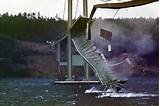
Collapse of the original bridge in 1940
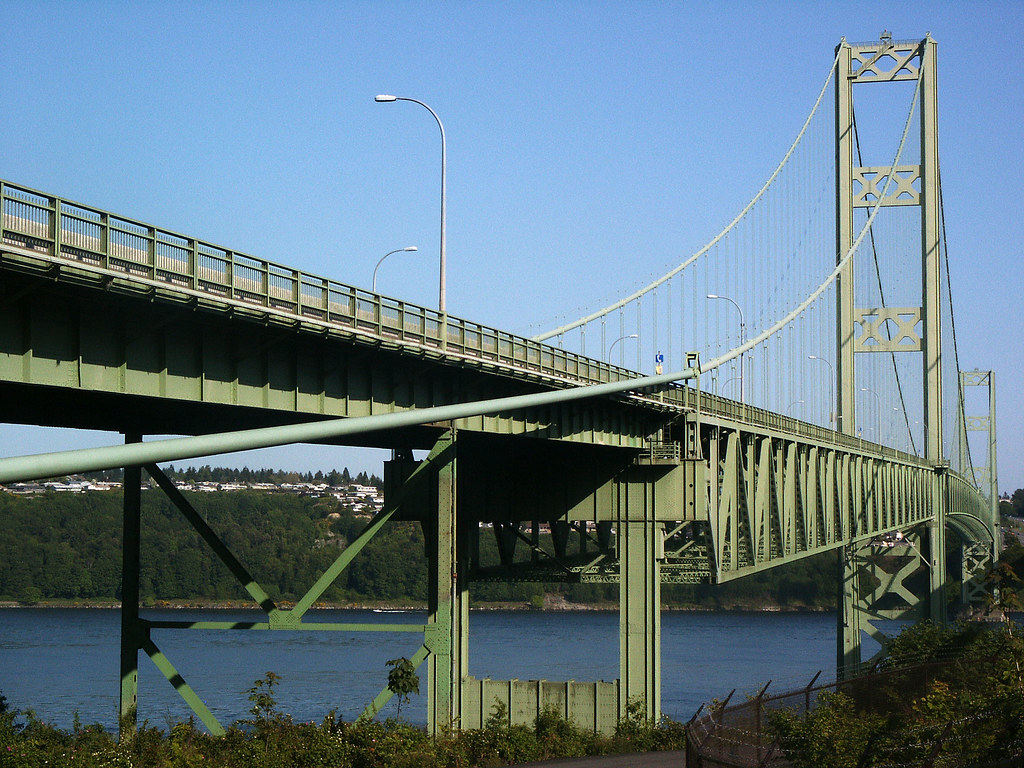
Replacement bridge completed in 1950
On November 7, 1940, just four months after its grand opening, the Tacoma Narrows Bridge—nicknamed Galloping Gertie for its wave-like motion—collapsed into Puget Sound.
Leon Moisseiff, the consulting engineer behind the project, had helped design landmark bridges like the Manhattan and Golden Gate. But the Narrows presented unique aerodynamic conditions that were poorly understood. Moisseiff’s faith in slender, flexible design—economical but unstable—proved disastrous. He and his engineers opted for a shallow, narrow deck with solid plate girders, which caught wind like a sail and amplified both vertical and twisting forces.
On the day of the collapse, steady 42-mph winds triggered aeroelastic flutter: a self-exciting vibration that escalates. The bridge’s flexible structure couldn’t dissipate the energy, leading to violent oscillations that ended only when sections of deck and their supporting girders twisted apart and plunged into the frigid waters of Puget Sound.
There was one death: a Cocker Spaniel named Tubby. If you find yourself in Gig Harbor, you can pay your respects at Tubby's Trail Dog Park.
After the collapse, engineers undertook extensive wind tunnel testing, a relatively new practice at the time. The replacement bridge, opened in 1950, featured an open truss design that let wind pass through, along with stiffening struts and a wider deck to improve stability and rigidity.
A short documentary by the Washington State Historical Society captures both the tragedy and triumph of Galloping Gertie and its successor, Sturdy Gertie.
Recent federal investments mark the largest surge in infrastructure spending in decades. Yet the lesson of the Narrows was as much about learning as spending. The engineers and officials who rebuilt the bridge experienced failure, revised their assumptions, and established new standards. Resilience is never finished. It is the discipline of correction and care, one the country must continually relearn.
Takeaway: The lesson of Galloping Gertie is that structures fail when ambition outpaces attention. Enduring infrastructure demands not just bold design, but the continuous discipline of care.