Cooper’s Ferry and the Public Work of Discovery
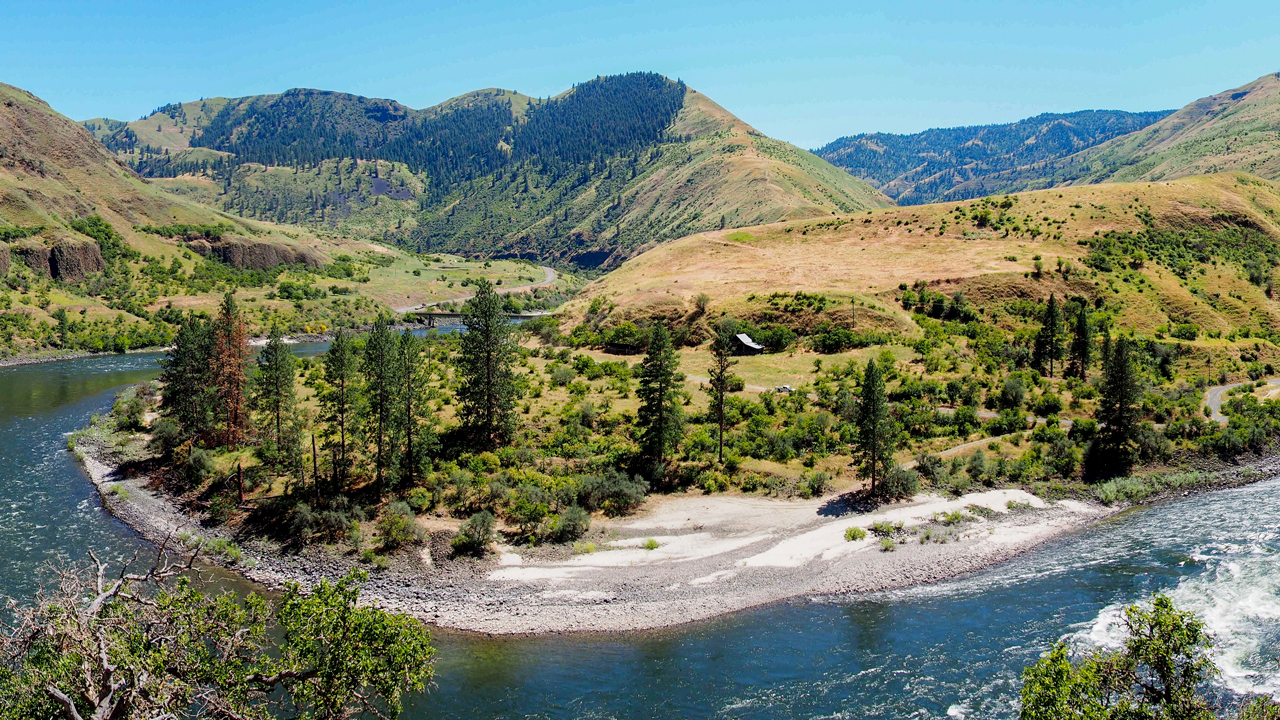
At a bend on Idaho’s Salmon River, archaeologists uncovered a hearth with charred bone and stone tools radiocarbon-dated to about 16,000 years ago.
Some know the site as Cooper’s Ferry. To the Nez Perce Tribe, it has long been Nipéhe, a place of memory and meaning.
Led by Oregon State University archaeologist Dr. Loren Davis, the excavation spanned more than a decade on Bureau of Land Management land and involved close collaboration with Nez Perce tribal members. Project support came from BLM challenge cost-share agreements and private philanthropic funds. The result is widely regarded as one of North America’s most important archaeological sites.
The find challenges the Clovis-First model, which holds that the earliest Americans—identified by distinctive fluted spear points—crossed Beringia and moved south through an inland ice-free corridor around 13,000 years ago. Cooper’s Ferry points to a much earlier human presence, one more consistent with migration along the Pacific coast. Evidence from East Asian island sites dated to about 30,000 years ago, where advanced seafaring is well documented, suggests that people of that era already had the means to follow such a route.
An emerging view—introduced by Dr. Davis and colleagues—proposes a pre-Clovis tradition, coined the “American Upper Paleolithic,” that bridges Northeast Asia and the Americas. At Cooper’s Ferry, researchers identified two complementary methods of stone-tool production that parallel those in Late Upper Paleolithic Northeast Asia. Davis et al. (2025), Science Advances.
A similar pattern emerges at other sites, including Paisley Caves in eastern Oregon (about 18,000 years ago) and Page-Ladson in Florida’s Aucilla River (about 14,550 years ago). Their stone-tool assemblages are consistent with findings at Cooper’s Ferry and further illustrate how early human presence spread broadly across the continent.
In the southwest, at White Sands National Park, scientists have uncovered some of the most striking evidence yet: more than sixty human footprints pressed into what was once the muddy shore of an ancient lake. In some trackways, people seem to have stepped into sloth prints; in others, they dragged travois-like frames across soft mud.
The footprints, first discovered by National Park Service staff in 2009, lie within seven layers of sediment spanning two millennia. Radiocarbon dating of Ruppia cirrhosa seeds, terrestrial pollen, and lakebed organic material—verified through research funded by the U.S. Geological Survey—places the human activity between 21,000 and 23,000 years ago, during the height of the last ice age. Visitors can explore artifacts and trackways in the USGS image gallery for Fossilized Footprints in White Sands National Park, which captures these preserved impressions in remarkable detail.
Recent research questions the validity of many pre-13,000-year southern sites on stratigraphic-integrity grounds. Surovell et al. (2022), PLOS One. Other findings, however, such as the footprints at White Sands, continue to yield strong evidence of early and sustained human presence south of the ice sheets.
The Clovis model described early Americans as hunters moving south through ice-free corridors. New evidence points to a much earlier and more familiar pattern: people traveling by water, guided by the same intuition and ingenuity that carried humans to Australia, Japan, and beyond tens of thousands of years earlier. Taken together, these discoveries suggest that sites older than 14,000 years may represent only a chapter in a much longer story, one that began along the coast millennia before and gradually spread east and south.
Takeaway: Projects such as Cooper’s Ferry receive only a fraction of the public investment devoted to other work. Yet they remind us why discovery matters. Work like this demands long hours of deep thought and quiet toil. It takes time—and the means to give time its due—to enrich our understanding of what it means to be human.